-
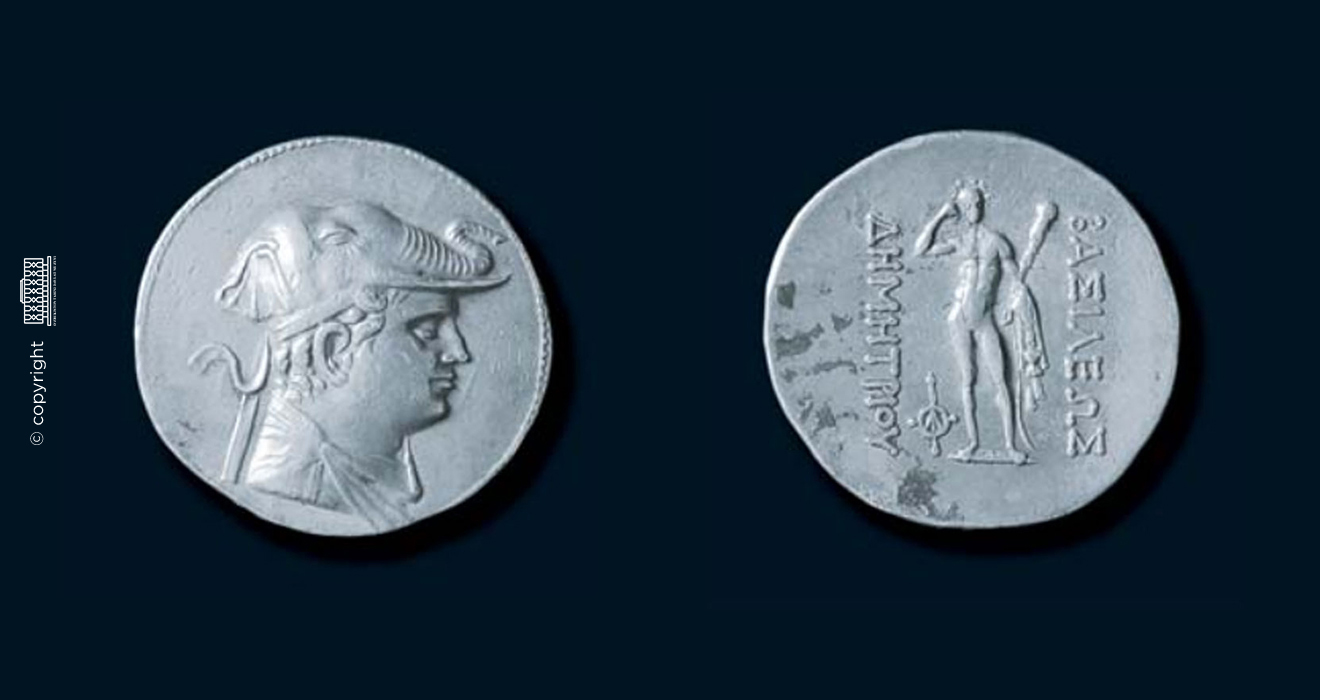
The history of the Early Middle Ages is marked by important political, social, ethnic, and cultural changes. During this period, dozens of large and small oasis principalities arose on the territory of Uzbekistan, which maintained a certain degree of political independence up until the Arab conquest. The most powerful among them were Chach, Fergana, Samarkand, Ustrushana, Bukhara, Khorezm, Chaganiyan, and others. These domains minted their own coins and established diplomatic, trade, and cultural relations with the states of both the East and the West.
The traditional economic foundations of the region—agriculture based on artificial irrigation, animal husbandry, horticulture, crafts, and urban development—continued to actively develop during this time.
The architecture of buildings, wall paintings, and sculptural compositions of Toprak-kala (Khorezm), Balalyk-tepa (Surkhandarya), Afrasiab (Samarkand), and Varakhsha (Bukhara) depict the appearance of the people, their clothing details, jewelry, and the distinctive local schools of painting. All of this testifies to the high artistic traditions of the local population, whose roots go back centuries.
Of great importance was the fact that the Great Silk Road passed through the territories of the ancient states of Uzbekistan. The Silk Road played a significant role in the development of economic and cultural relations among different peoples. For example, it served as a channel for the spread of technologies and innovations—such as silk production, gunpowder, paper, etc.—as well as new trends in the arts (dance, music, visual art, architecture) and religions (Christianity, Buddhism, Islam, Manichaeism).
From the 5th century, the dominance of the Hephthalites was established on the political map of Central Asia. The borders of their state extended as far as Eastern Turkestan, to Khorasan in the southwest, and to northwestern India in the southeast.
The Hephthalites, who became a serious rival of the Sassanid rulers of Iran, later—together with the Turkic Khaganate—prevented the campaigns of the Sassanid army into Mesopotamia. During the rule of both powers, the local oasis principalities retained their administrative autonomy.
In the mid-5th century, the Hephthalite tribes, emerging from the southwestern foothills of the Altai, passed through Eastern Turkestan into Pamir–Badakhshan and soon settled in Tokharistan (Greco-Bactria). In written sources, in addition to the name “Hephthalites,” they are also referred to as the “White Huns” “Alkhons” or “Abdals.” In 453, the Hephthalites defeated the troops of the Sassanid shah Yazdegerd in Tokharistan and advanced to the borders of Iran.
From the mid-6th century, Turkic tribes lived in the steppes of the Altai and Mongolia. United under the leadership of Bumin, they founded the nomadic Turkic state—the Khaganate—and launched military campaigns, incorporating a number of regions of Central Asia into its domain.
The Turkic Khaganate turned into a powerful state, with borders stretching eastward to Korea, westward to the Black Sea, northward to southern Siberia, and southward to the Indus River.
In the economic life of the Khaganate, no major social or economic changes occurred, as continuous wars were waged with Iran and China. However, foreign trade acquired special importance, with Sogdian merchants playing a particularly significant role.
The Turkic tribes who migrated into the region, mixing with the local population, had a profound influence on the ethnic culture of the peoples of Central Asia.