-
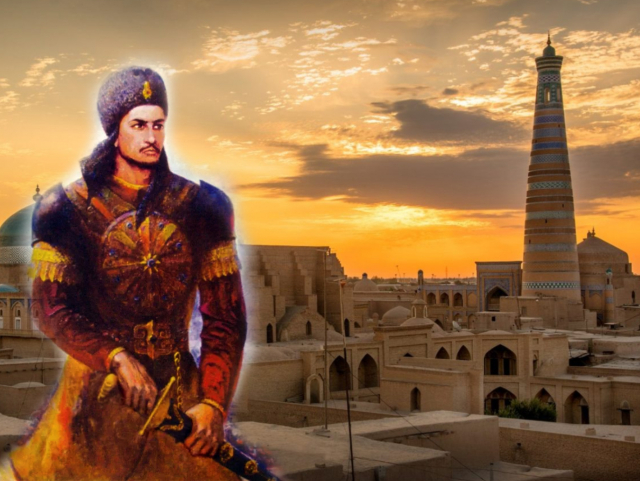
THE MONGOL INVASION.
The Khwarezmshah dynasty, also known as the Khorezmshahs or Khwarazmian Empire, was a major medieval Muslim empire in Central Asia and Iran that flourished roughly between 1077 and 1231.
The dynasty was founded by Anūştegin Gharchai, a Turkic mamluk (slave‐military officer) appointed governor of Khwarezm by the Seljuq ruler around 1077. Initially, the Khwarezmshahs were vassals of larger powers: first the Seljuq Empire, and later the Qara Khitai (also called Western Liao). Over time they asserted greater independence. Key rulers in their rise include ʿAlāʾ al-Dīn Tekish (reigned 1172-1200) who consolidated power, and ʿAlāʾ al-Dīn Muḥammad II (reigned 1200-1220), under whom the empire reached its territorial peak.
At its height, the empire stretched from the borders of India to Anatolia (modern Turkey), encompassing large parts of present-day Turkmenistan, Uzbekistan, Afghanistan, and Iran. Islam was the state religion, and Persian was adopted as a literary and administrative language. The administrative apparatus included viziers, local governors, tax officials, and military elites largely composed of Turkic and mamluk soldiers.
Under the Khwarezmshahs, cities like Gurganj (Urgench), Samarkand, and others became flourishing centers of culture, trade, learning, and science. The empire maintained and expanded complex irrigation systems feeding agriculture in a largely arid environment; trade networks were extensive, with coinage and goods moving across Central Asia and beyond.
During this period, Persian was used for administration and official documentation, while the population predominantly spoke Turkic. The state was a large military-feudal organization. The army was well-trained and well-armed, and every soldier from childhood mastered horseback riding and several types of weapons. The capital was Gurganj (Urgench), which, along with Samarkand and Bukhara, was a major center of science, trade, and culture. Another ancient and important city of the region was Khazarasp, which existed even before Alexander the Great’s arrival in the 4th century BCE.
The Khwarezm Shahs paid particular attention to trade. For many world powers, Khwarezm became an important trade hub with China. Precious and semi-precious stones, metal products, silverware, locks, mirrors, jewelry, bridles (decorated with gold and silver), textiles, and agricultural products—including fruits, nuts, and spices—were exported.
The development of trade stimulated the growth of crafts. There were about 50 main specialties, including blacksmiths, carpenters, ivory and wood carvers, tailors, and silk production, among others.
Agriculture was dominated by farming, with every patch of land cultivated. Irrigation canals and dams were built. Crops included cotton, melons, and various fruit trees.
A careful analysis of material culture monuments suggests that even at that time, exact and natural sciences had reached a high level of development in Khwarezm.
At the beginning of the 13th century, the peoples of Central Asia faced the devastating invasion of the Mongols led by Genghis Khan. The campaign began with fierce battles against the Khwarezm Shahs’ state, which ruled vast territories. Over the course of nearly two years, Mawarannahr was conquered, and countless cities and cultural monuments were destroyed. Scholars and intellectuals were either killed or forced to flee to other countries, leading to a deep decline in science and culture.
The last effective ruler, Jalāl al-Dīn Manguberdi, reigned after the fall of Muḥammad II but was unable to restore lasting stability. By 1231, the Khwarezmian Empire was formally destroyed by the Mongols. Thus, at the start of the 13th century, Central Asia once again lost its independence, falling under Mongol rule.
In the exhibition there is a picture of the struggle of the local population for independence under the leadership of Jalal ad-Din Manguberdi, as well as a map showing the division of the Mongol Empire into uluses after the death of Genghis Khan—Central Asia became part of the Chagatai Ulus.
The exhibits illustrate the socio-economic and political conditions of Mawarannahr during its inclusion in the Mongol Empire: coins, handwritten documents, a silver paiza (imperial tablet), a portrait of Jalal ad-Din Manguberdi, and weapons such as Mongol spears and arrowheads (some of which were designed to produce a whistling sound when shot, creating a psychological effect on the enemy).