-
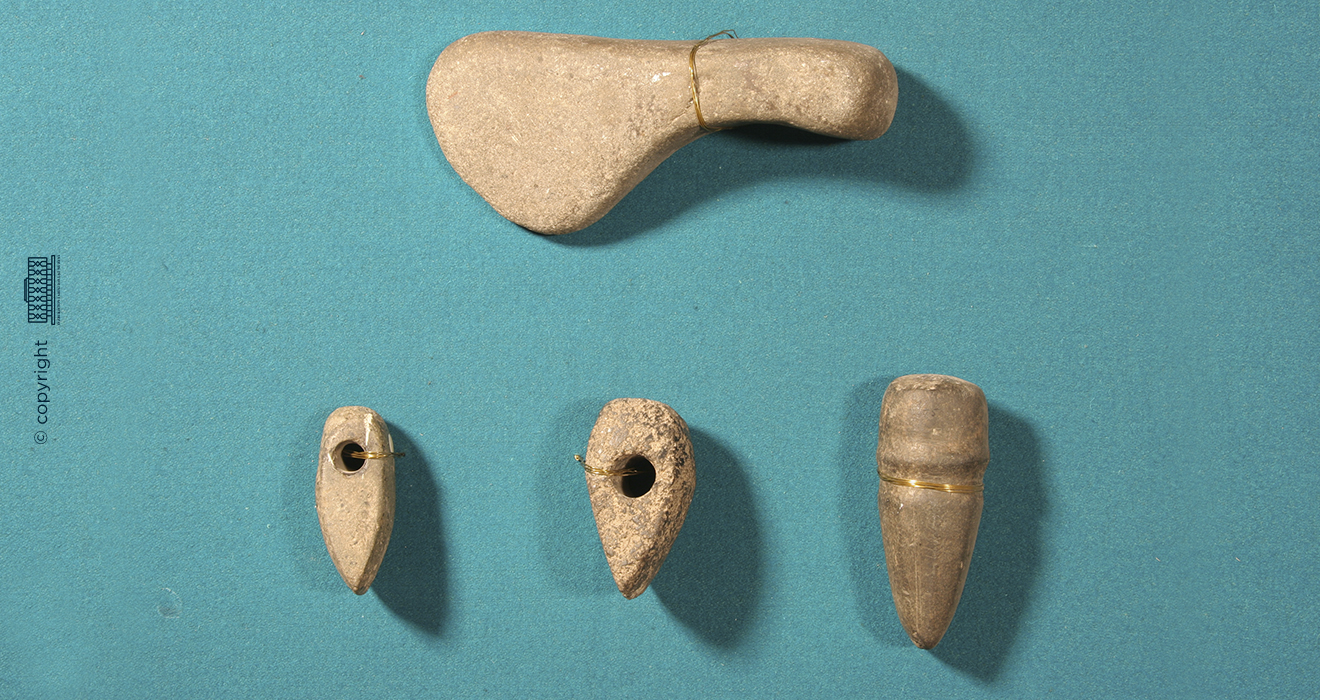
The history of humanity is a long process of continuous development spanning no less than three million years. The earliest and longest stage of this history is the Stone Age, which is divided into the Paleolithic (Old), Mesolithic (Middle), and Neolithic (New) periods. This era is characterized by the mastery of methods for making stone tools and hunting weapons, adaptation to the surrounding environment, and the formation of social relations.
The Paleolithic covered vast territories, with its monuments discovered in Africa, Europe, Asia, and other continents. Archaeological finds in the Olduvai Gorge (Africa), as well as at sites in Europe and Asia, are of great importance for studying the earliest history of humankind. The main occupations of people living in this period (Homo erectus, Neanderthal, and Homo sapiens) were hunting and gathering.
The Paleolithic, with its extensive history, also left a mark on the development of Uzbekistan. Unique monuments of the Stone Age have been discovered here — caves, grottos, and ancient settlements. During this period, mining for mineral resources began to emerge. Their study shows that, starting from the early stages such as Selungur (400,000 years ago) and Kulbulak (240,000 years ago) up to the culturally advanced Neolithic period (7th millennium BCE), the territory of Uzbekistan witnessed the gradual development of human society. Research indicates that this region was one of the earliest centers for the formation of the modern physical appearance of humans and their way of life.
During the Stone Age, the thinking of early humans developed, along with mythology and visual art (burial rituals, rock paintings, and their themes). In the Paleolithic, people learned to use fire, and in the Mesolithic, they invented the bow and arrows. Primitive herds were replaced by clan communities.
In the Mesolithic, a transition occurred from a foraging economy to a producing one. The cultivation of plants and the domestication of animals led to the development of agriculture and animal husbandry, which in turn resulted in the social division of labor. At the same time, methods of stone processing were improved. In the Neolithic, people began building houses from adobe. The production of clay objects also became an important stage in the evolutionary changes in the life of ancient people.